

2026
Awards
▾ Council of the Year
▾ Gold Trout
▾ Silver Trout
▾ Distinguished Service in Conservation
▾ Jack Williams Award for Applied Conservation Science
▾ Distinguished Service in Communications
▾ Distinguished Service in Youth Education
▾ Distinguished Service in Leadership
▾ Conservation Professional Award
▾ Communications Professional Award
Council of the Year:
Colorado Council
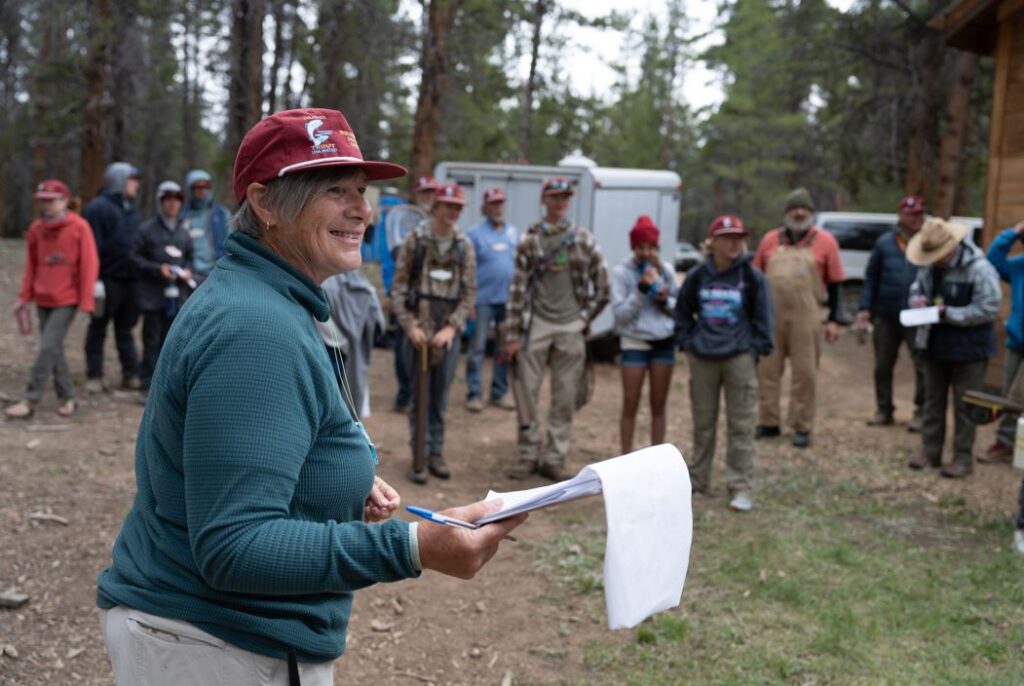
The Colorado Trout Unlimited Council has become a national model for what a healthy, resilient and forward-looking grassroots organization can be. Representing more than 12,000 members across 22 chapters, Colorado TU has built a culture where education, advocacy and hands-on conservation volunteerism reinforce one another to create lasting impact across the state. With more than 44,000 volunteer hours contributed annually, Colorado TU’s grassroots network demonstrates what is possible when local chapters operate as one unified conservation community.
The Council has earned a reputation as a trusted, nonpartisan voice for Colorado’s rivers. It brings together anglers, landowners, Tribal Nations, local communities, public agencies and conservation partners around practical, science-based solutions. Through its Advocacy Committee, Colorado TU prepares volunteers to engage confidently and constructively in public policy. Their voices help advance clean water, healthy watersheds, public lands and strong protections for Colorado’s native and wild trout.
Colorado TU also gives its chapters the support and shared purpose needed to turn statewide priorities into local action. Chapter leaders receive tools, training and opportunities to collaborate across geographic boundaries. In 2026, volunteers from chapters across the state tied and donated more than 2,300 flies through the Tie-4-the-Future Challenge, directly supporting youth education programs. Colorado TU’s new Gear Libraries are expanding access to fishing equipment and environmental education materials for chapters, community groups and young people throughout Colorado.
Colorado TU’s success is measured not only in healthy rivers, but in healthy communities. Troutfest Colorado has grown into one of the region’s premier celebrations of conservation and fly fishing. Thousands of people gather for hands-on learning, youth activities, casting instruction and an introduction to the organizations caring for Colorado’s waters. The event creates an easy and welcoming path into TU for families, new anglers and first-time conservation volunteers.
That invitation begins early. Trout in the Classroom now brings hands-on conservation education to thousands of students through well over 100 tanks across the state, with plans to reach more than 100 sites. Colorado TU’s longstanding River Conservation & Fly Fishing Camp gives teenagers a deeper experience rooted in watershed science, angling, friendship and leadership. The volunteer-led camp also awarded more than $12,000 in tuition scholarships last year, helping ensure that cost does not close the door on participation.
Under the leadership of Past Chair Barbara Luneau, current Chair Dave Haeusler, a dedicated Executive Committee and exceptional staff, Colorado TU has invested intentionally in mentorship, volunteer development, organizational modernization and thoughtful succession planning. That leadership was tested when a rapidly advancing wildfire forced the evacuation of the youth camp. Colorado TU leaders calmly guided campers to safety, spent the night alongside them on the floor of a Red Cross shelter and reassured their families—an extraordinary example of servant leadership in action.
Colorado TU has built a community of leaders, volunteers and partners united by a shared commitment to healthy rivers and the people who depend on them. By investing in people as intentionally as it invests in conservation, Colorado TU exemplifies the very best of TU.
Gold Trout:
Twin Cities Chapter (MN)
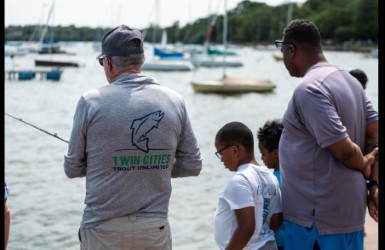
Nestled in the heart of one of our country’s major city centers, the Twin Cities Chapter (TCTU) has proven again and again that an urban chapter can fully embrace the entire TU mission and build a powerful community of anglers and conservationists engaged in volunteering, advocating and supporting our work in the Driftless and Great Lakes regions, as well as national efforts.
Boasting a membership roster nearing 2,000 members – with more than twice as many community supporters – TCTU is not only one of largest chapters nationwide, it is also one of the most active. Last year, the chapter hosted almost 200 events, nearly four per week on average, proving that active community engagement can be the underpinning of a thriving chapter.
While centered in the “Twin Cities” of Minneapolis and St. Paul, the chapter is incredibly active in conservation and science and routinely marshals hundreds of volunteers annually – sometimes traveling an hour or more – to support habitat restoration projects, community science initiatives and staff-led conservation efforts well beyond their chapter’s borders.
As expected of a chapter in a dense demographic region, TCTU’s youth education and outreach efforts and social programming are varied and powerful – drawing in a diverse community of members and supporters. A marquee program of that effort is their support of the state’s Foster the Outdoors Mentorship program – which pairs a TCTU mentor with a youth and their family through an entire season of learning about fly fishing, conservation and the outdoors.
TCTU lives the ‘One TU’ motto and through its support and involvement in all areas of TU’s mission demonstrates the passion and commitment of its leaders, volunteers, members and supporters to our work, making it a powerful choice for this year’s Gold Trout Award.
Silver Trout:
Madison-Gallatin Chapter (MT)
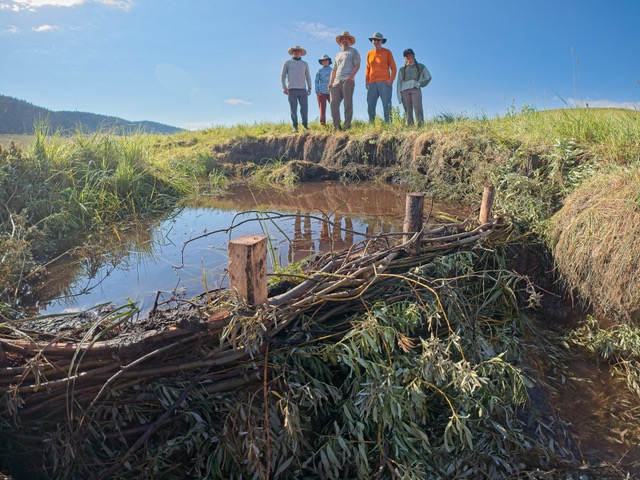
Few TU chapters embody the full breadth of the organization’s mission as completely as Montana’s 024 – Madison-Gallatin Trout Unlimited Chapter (MGTU.) Since its founding in 1968, the chapter has become a conservation leader not only in southwest Montana but across the national TU community, demonstrating excellence in restoration, volunteer engagement, communications, fundraising and leadership development.
Few TU chapters embody the full breadth of the organization’s mission as completely as Montana’s 024 – Madison-Gallatin Trout Unlimited Chapter (MGTU.) Since its founding in 1968, the chapter has become a conservation leader not only in southwest Montana but across the national TU community, demonstrating excellence in restoration, volunteer engagement, communications, fundraising and leadership development.
Serving one of the fastest-growing regions in the country, the chapter has embraced the challenge of increasing pressure on treasured trout waters by inviting more people into conservation rather than pushing them away. Volunteers introduce new anglers to their treasured rivers, organize stream cleanups, restore habitat, mentor youth and veterans, and build lasting connections between their community and its world-class coldwater fisheries.
The chapter’s conservation accomplishments are remarkable. Recognizing that lasting conservation requires sustained local capacity, MGTU has invested in baseline funding for a dedicated TU project manager, creating the foundation that has helped leverage millions of dollars for restoration projects across southwest Montana. Through those strategic investments and partnerships, the chapter has directly supported stream restoration, fish passage improvements, watershed health and native trout recovery. Just as importantly, MGTU understands that successful conservation depends on strong relationships, working closely with agencies, nonprofit partners, local businesses and landowners to accomplish far more together than any organization could alone.
Equally impressive is the chapter’s commitment to building the future of TU. Through Trout in the Classroom, the TU Service Partnership, youth conservation camps, monthly educational programs and innovative volunteer opportunities, MGTU welcomes people of every generation into the organization. Its leadership intentionally develops new volunteers into future chapter, council and national leaders, ensuring the chapter’s impact will continue for decades to come.
MGTU consistently demonstrates that conservation succeeds when people feel connected to the resource and to one another. For nearly six decades, the chapter has set a standard of excellence that inspires TU chapters across the country, making it a worthy recipient of the Silver Trout Award.
Distinguished Service in Conservation:
Russ Collins (PA)
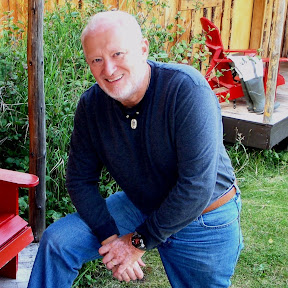
Russ Collins has spent decades proving that conservation leadership extends far beyond the streambank. A longtime leader of Pennsylvania’s 108 – Doc Fritchey Chapter and a respected voice across TU, Russ has combined hands-on restoration, collaborative leadership and national conservation advocacy to leave an enduring mark on both his home waters and the organization as a whole.
Under Russ’s leadership, the Doc Fritchey Chapter has built one of the most successful grassroots conservation portfolios across TU. The chapter has secured more than $4 million in restoration funding to reconnect streams, remove obsolete dams, restore streambanks, improve in-stream habitat and protect water quality. When beloved streams such as Snitz Creek were damaged by pipeline construction, Russ worked tirelessly to hold responsible parties accountable while helping lead long-term recovery efforts that restored both habitat and community confidence.
Russ’s influence reaches well beyond Pennsylvania. As co-chair of the National Leadership Council’s Climate Change Workgroup and Communications Workgroup, he has become one of TU’s most trusted volunteer leaders. He has organized educational forums, convened nationally respected scientists and policymakers, fostered partnerships with organizations such as Citizens’ Climate Lobby, and helped create thoughtful, bipartisan conversations around one of conservation’s most complex challenges. Throughout it all, Russ has consistently focused on finding common ground and advancing practical solutions for protecting coldwater fisheries.
Jack Williams Award for Applied Conservation Science:
Grant Domke (U.S. Forest Service)
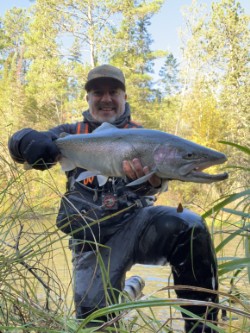
A research scientist with the USDA Forest Service whose work has helped shape how the United States measures and reports the role of forests in addressing climate change, Grant Domke has long supported TU staff and other partners in developing their programs.
An internationally recognized expert in forest carbon science and forest inventory, he has contributed to U.S. greenhouse gas reporting, international scientific assessments, and the development of methods used to better understand the health and sustainability of America’s forests. Grant is passionate about ensuring that sound science informs land management and conservation.
When he’s not working, he enjoys spending time with his family, restoring their property along Wisconsin’s Brule River, and fishing and exploring the outdoors.
Distinguished Service in Communications:
Rhode Island Chapter (RI)
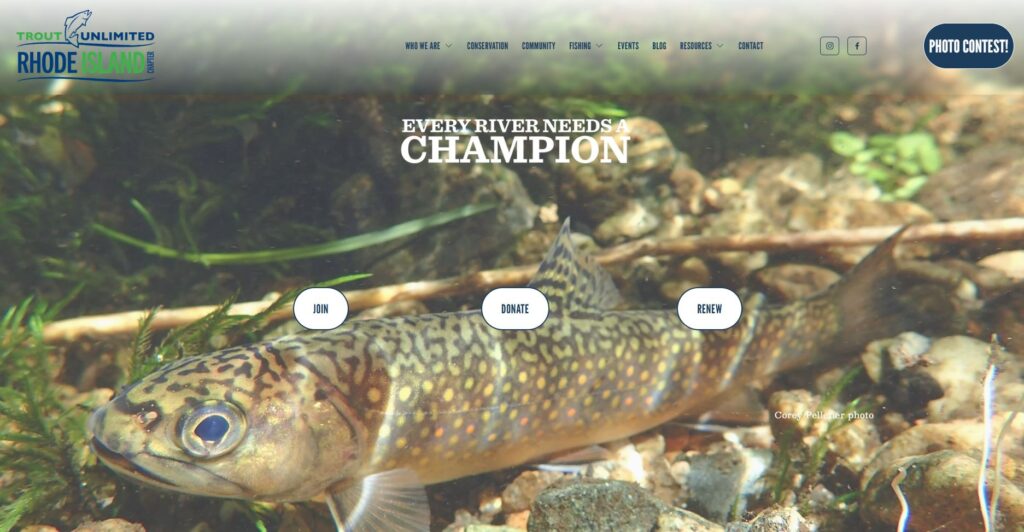
Perhaps no chapter in the country has leaned into the Champions brand rollout as strongly as the Rhode Island Chapter.
Tying the key messaging into all of their communications channels, they have proven the effectiveness of inviting people in to be a champion for the waters they love and building a community of ardent supporters for their ongoing work.
On their digital channels, in their print materials, tabling and signage, they reflect the brand colors, messaging and – importantly – the brand personality of Passionate, Hopeful, Committed, Empowering.
The board members and volunteers also live and breathe as model “champions” in their communities – recognizing that they are demonstrating the values of the chapter and TU daily and attracting like-minded people to step forward.
Distinguished Service in Youth Education:
Rodney Tumlin (GA)
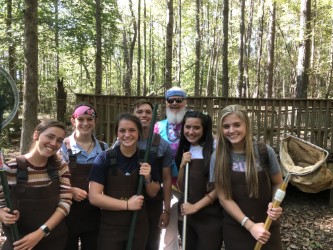
For more than two decades, Rodney Tumlin has inspired young people to discover stewardship, curiosity and caring for the natural world through environmental education and fly fishing. A retired science teacher and longtime TU volunteer from Georgia, Rodney has dedicated much of his life to creating opportunities for young people to connect with coldwater conservation through meaningful, hands-on experiences.
Rodney’s impact spans nearly every aspect of TU’s youth education efforts. He introduced one of Georgia’s earliest Trout in the Classroom programs and later served as Trout in the Classroom Director for the 242 – Cohutta Chapter, dramatically expanding the number of participating schools. As Georgia Trout Camp Director for more than a decade, he helped shape one of the state’s premier youth conservation experiences, mentoring countless campers while coordinating every aspect of camp operations.
Recognizing the importance of engaging students beyond the classroom, Rodney established Georgia’s first 5 Rivers program and founded the North Paulding High School Fly Fishing and Coldwater Conservation Club. That innovative student club became the model for TU’s national Student Clubs initiative, influencing how the organization now engages high school students across the country. Even after retiring from teaching, Rodney continues volunteering with the Club and supporting both the high school and college programs grow and evolve at the national level. As a small example, Rodney generously offered his family farm as a location for dozens of camping college students at our 5 Rivers Southeast Rendezvous. He stuck around to support on logistics, cooking, mentorship and a lot in between.
His passion for education extends well beyond TU. Rodney founded environmental clubs, led educational travel programs, taught Advanced Placement Environmental Science and earned recognition as Teacher of the Year at one of Georgia’s largest high schools. Throughout his career, he has helped thousands of students see conservation not simply as a lesson to be learned, but as a lifelong responsibility. Rodney’s legacy can be found in the countless young people who first tied a fly, released a trout or discovered a passion for conservation because of his encouragement. His commitment to educating, mentoring and inspiring the next generation embodies the very best of TU’s mission, making him a deserving recipient of the Distinguished Service Award in Youth Education.
Distinguished Service in Leadership:
Randy Arnold (WI)
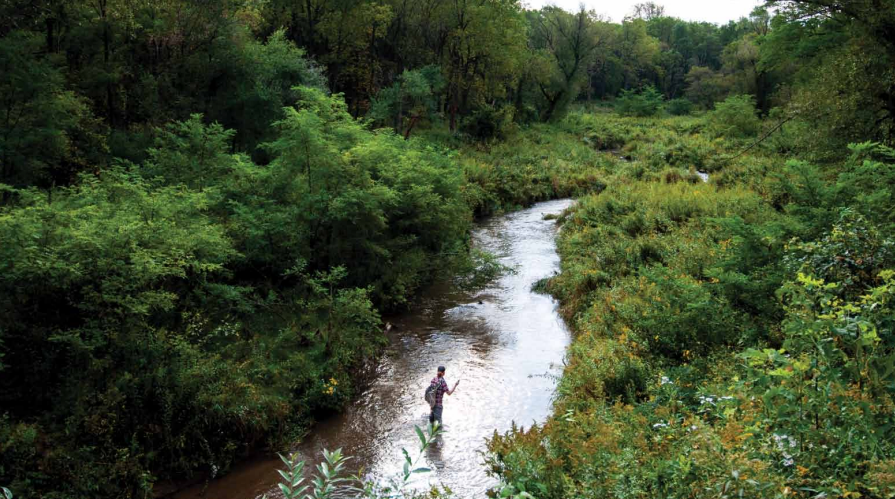
A dedicated leader within the Kiap-TU-Wish Chapter for decades, Randy Arnold is highly respected and appreciated not only in his home state of Wisconsin, but across the border in Minnesota for the leadership he provides and support he offers as a mentor and partner to all chapters and volunteers.
His ability to organize volunteers, coordinate conservation efforts, and build strong working relationships has made him an invaluable partner in regional coldwater conservation. From 2015 to 2026 alone, Randy coordinated and led volunteer service projects amounting to 20,177 trout habitat volunteer hours!
Randy’s work is also greatly appreciated by the Wisconsin Department of Natural Resources. He has been instrumental in removing invasive species along riverbanks and preparing sites for habitat restoration projects that are later initiated and completed by the Wisconsin DNR on numerous rivers and streams in northwest Wisconsin, particularly in the Baldwin and River Falls area.
Through his steady leadership, collaborative approach, and tireless commitment to stream restoration, Randy exemplifies the qualities recognized by the Distinguished Service Award for Leadership.
Conservation Professional Award:
Mark Nemeth (Minn. Dept. of Natural Resources)
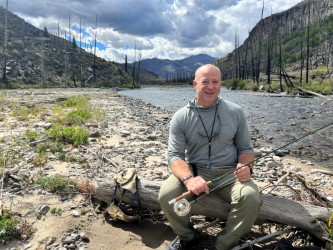
In his career as a Trout Stream Habitat Specialist for the Minnesota’s Department of Natural Resources, Mark Nemeth has been a champion of Minnesota’s native and wild fish, a critical partner among diverse stakeholders, and a powerful advocate for hard science informing fisheries management and recovery.
Mark has played a central role in advancing science-based, field-driven restoration of some of the state’s most important trout streams—most notably the Vermillion River and the Cannon River watershed.
Over the past decade, he has helped guide the transformation of degraded stream systems into resilient, functioning coldwater ecosystems. His work spans the full lifecycle of habitat restoration: identifying priority reaches, coordinating with landowners and partner organizations, advancing projects through environmental review and permitting, and overseeing on-the-ground implementation. He has consistently brought together public agencies, nonprofit partners, and local stakeholders to deliver durable conservation outcomes.
A defining example of his impact is his involvement in the large-scale restoration of the South Branch of the Vermillion River. This project restored thousands of feet of stream, making a measurable improvement in trout habitat.
Through a decade of dedicated service, Mark has advanced the conservation of trout and coldwater resources in Minnesota in a way that is both measurable and enduring. His leadership, technical expertise, and collaborative approach embody the highest standards of conservation practice and he is without doubt most deserving of the Conservation Professional Award this year.
Communications Professional Award:
Lynda Mapes (WA)
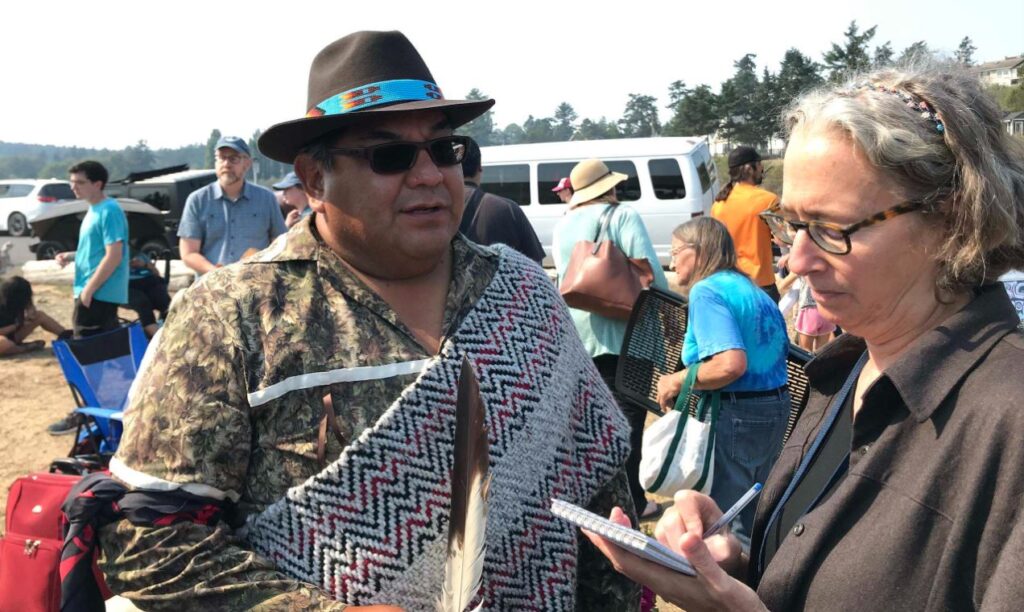
Lynda Mapes’ extraordinary contributions to trout and salmon conservation through decades of reporting, books, and public engagement have played a critical role in the work of TU and our partners in the region.
Recently retired as a reporter with the Seattle Times, Lynda has had a distinguished career as an environmental journalist, in which she has consistently covered the connections between healthy rivers, clean water, forests, and the fate of salmon and trout across the Pacific Northwest and beyond. Her work combines scientific rigor, deep engagement with Tribal knowledge, and vivid storytelling that makes complex watershed and fisheries issues accessible to broad audiences.
Again and again, she has put a spotlight on the drivers of decline — dams, habitat loss, climate change, etc. — while documenting solutions and the people working to implement them. Of particular interest to TU, Lynda’s reporting has covered the decades-long debate over the Lower Snake River dams.
Her recent book, “The Trees Are Speaking: Dispatches from the Salmon Forests” (2025), explores the critical connection between old-growth forests, river processes, and salmon habitat. This book is already influencing conversations about how we manage forests to sustain cold-water fisheries, and it is squarely aligned with TU’s emphasis on protecting intact headwaters and restoring degraded habitat.
For these reasons, and more, Lynda exemplifies the spirit of TU’s Conservation Award for Communications.